USDX: inflation will win the fight. Combined with long-term structural factors — political risks around Fed independence and the trend toward de-dollarization — this creates a persistent bearish backdrop for the US currency.
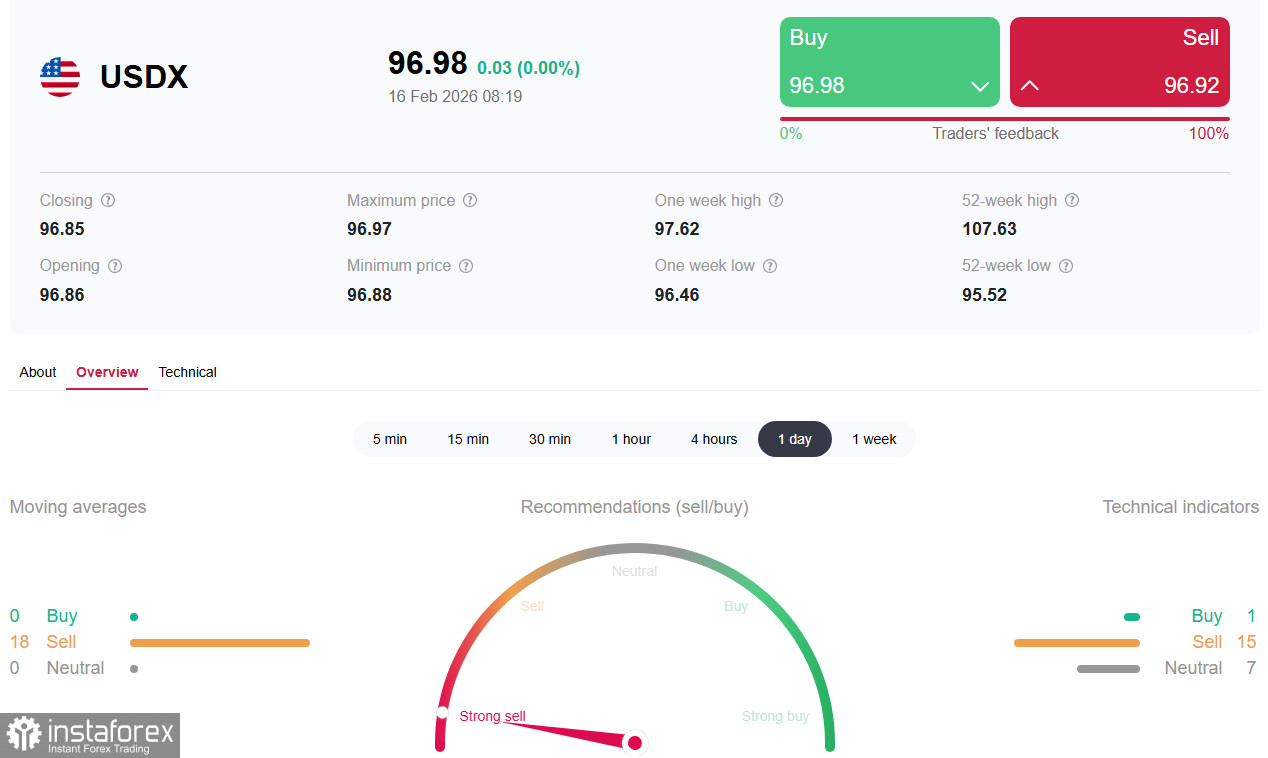
The US dollar enters the new week in a state of fragile balance. The dollar index (USDX), which measures the currency against a basket of six major peers, has stabilized just below the key 97.00 mark, showing relative calm amid US and Chinese holidays (Presidents' Day and Lunar New Year week). That apparent equilibrium, however, masks a powerful clash of fundamental forces that will determine the currency's medium-term fate.
Markets are still parsing the results of a very volatile prior week.
Labor data (surprising resilience) vs. inflation (the key pressure factor)
On Friday, the US Department of Labor released the January employment report, which beat expectations: nonfarm payrolls rose by 130k, well above the 70k consensus, and the unemployment rate unexpectedly fell to 4.3% from 4.4%. These numbers showed remarkable resilience in the US labor market, which is cooling only gradually, and initially supported the dollar by reinforcing the view that the Fed will not rush into easing.
Within days, however, the pendulum swung the other way. The January CPI print released Friday showed a marked slowing of inflation: annual CPI slowed to 2.4% from 2.7% in December, below the 2.5% forecast; monthly CPI was just 0.2%, down from 0.3% and under the expected 0.3%.
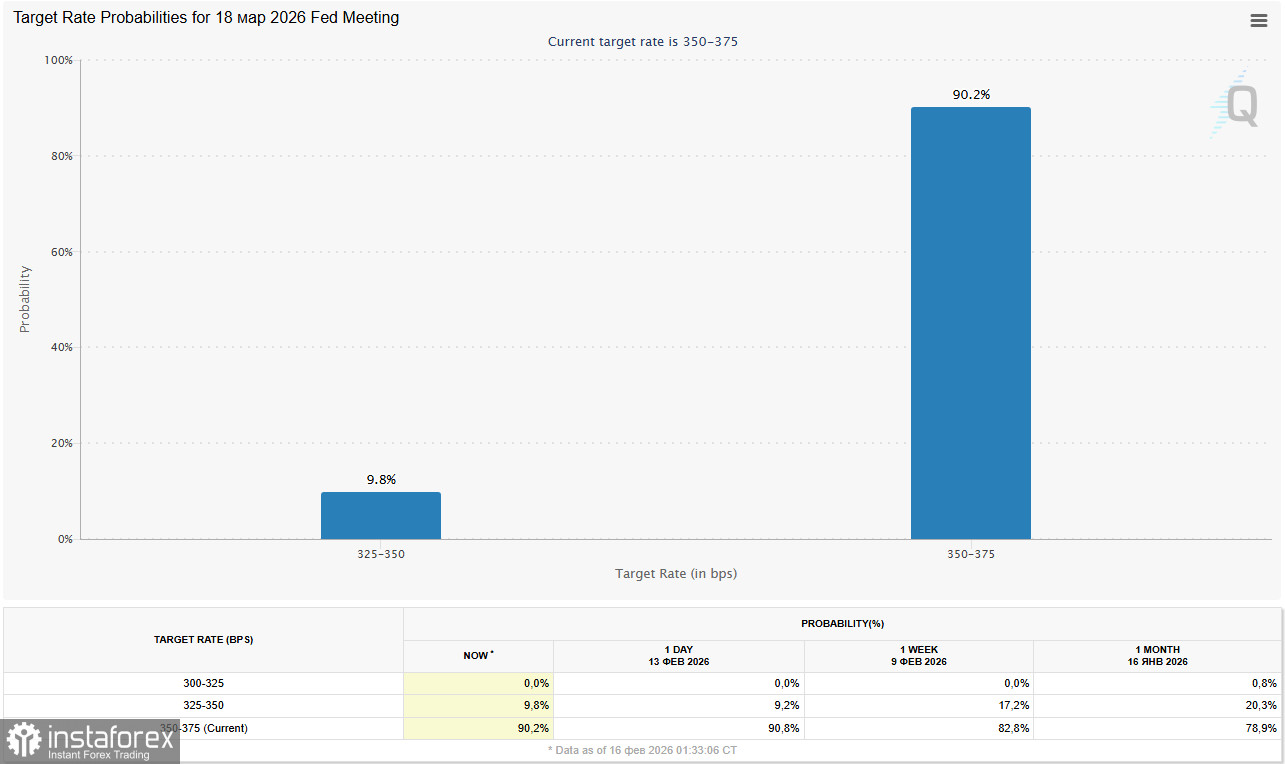
Those figures represent the lowest inflation readings since May 2025, and market expectations shifted markedly as a result. CME FedWatch shows a roughly 90% probability that the Fed will hold rates in March (up from 81% a week earlier). Markets now price in at least two 25bp cuts by year?end, with the first move seen as likely in June (~52% chance).
Chicago Fed President Austan Goolsbee recently described the CPI prints as mixed, flagging persistent services inflation as an area of concern, while still acknowledging room for rate cuts. He noted that policy rates still have scope to come down.
Structural factors weighing on the dollar
Despite resilient labor data, the broader outlook points toward possible easing. Beyond current macro prints, deeper structural factors — including heightened uncertainty over Fed leadership and the upcoming US elections — are increasingly factored into dollar forecasts.
- Political risks and Fed independence The dollar no longer enjoys the same support from rate differentials and the idea of US "exceptionalism." Institutional credibility and political risks now matter more; any interference with Fed independence could undermine confidence in the dollar as a reserve currency.
- De-dollarization as a long-term trend The move away from dollar dominance continues to exert background pressure. The dollar's share of international reserves is falling as central banks diversify holdings — including into gold, which returned nearly 68% in 2025.
Technical picture
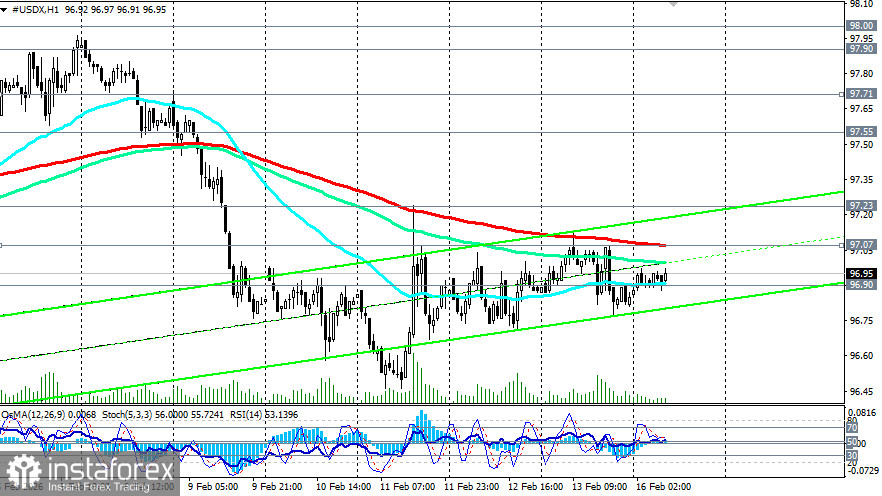
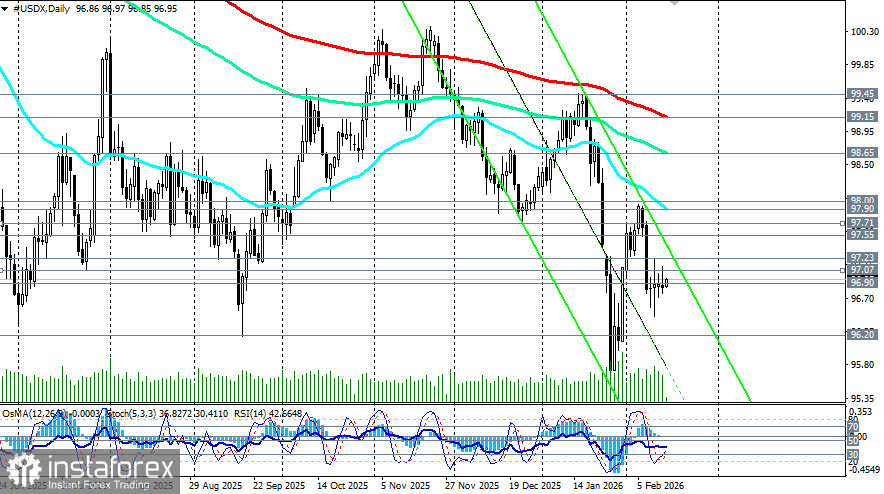
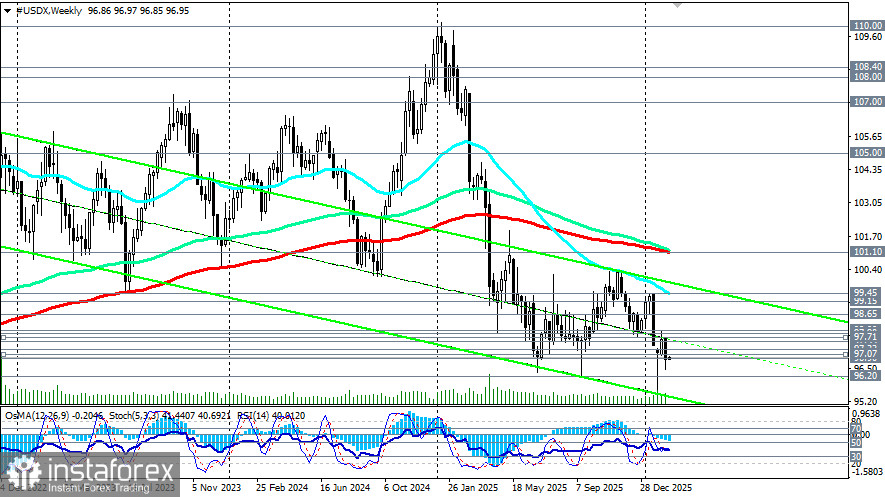
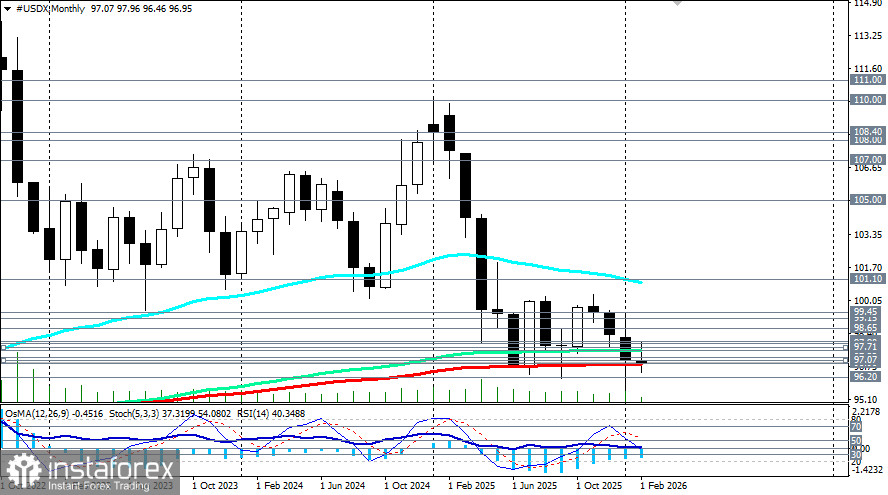
Technically, the USDX is balancing near strategic support at 96.90 (monthly 200-EMA). After a near-9.5% decline in 2025 — the weakest annual performance since 2017 — the index is consolidating below key mid-term moving averages: 99.15 (200?EMA daily) and 101.10 (200-EMA weekly).
A break of 96.90 could open the way for further losses, while immediate resistance sits in the 97.55 (144-EMA monthly) – 97.71 (200?EMA 4-hour) / 97.90 (50-EMA daily) area.
A close below 96.90 would push USDX into a global bear market zone. Given falling inflation, geopolitical risks and shifting Fed policy, that scenario would favor short positions on the dollar. To resume an uptrend, USDX needs a strong advance from current levels and a break above the 99.15–99.45 resistance band (weekly 50?EMA).
Conclusion
The current stabilization of the dollar around 97.00 is a temporary pause amid low liquidity and conceals a tense tug?of?war between a strong labor market and rapidly cooling inflation. Markets increasingly expect inflation to lose out, pricing in two rounds of Fed rate cuts in 2026. Combined with long-term structural factors — political risks to Fed independence and the de-dollarization trend — this produces a persistent bearish bias for the U.S. currency. In the coming weeks a break below 96.90 would likely accelerate selling and push the USDX toward new yearly lows.
Market attention this week will focus on the FOMC minutes and the PCE price index (the Fed's preferred inflation gauge). Those releases could be the trigger that lifts the dollar out of its current 96.50–97.00 range.