The dollar remains in the spotlight amid developments in the Middle East.
Yesterday, the dollar strengthened against the euro, the pound, and other risk assets amid another escalation in geopolitical tensions between the US and Iran. Ongoing strikes and countermeasures create an atmosphere of uncertainty in global markets, forcing investors to seek refuge in traditionally safe assets, such as the US dollar. This trend has been intensifying recently.
An important factor in the dollar's strengthening was the recently released data on US job openings for April. This figure, which rose to 7.618 million from March's 6.887 million, exceeded analysts' expectations. The significant increase in job openings, as measured by JOLTS, indicates the continued strength of the US labor market. Despite some signs of potential slowing, strong labor demand suggests the US economy remains resilient, which in turn supports the dollar.
Today's first half is expected to be busy, with important economic data for the Eurozone, including the May services PMI and the composite PMI. These macroeconomic indicators are crucial because they reflect the state of key sectors of the Eurozone economy and serve as leading indicators of future trends. The services PMI index, for example, covers a wide range of business activities, from tourism to finance, and its dynamics are directly linked to consumer demand and investments. Weak data in the services sector, especially following previous positive signals, could raise concerns about slowing economic growth in the region. The producers' price index (PPI) will also be important, as it is another critical indicator that anticipates changes in consumer price index (CPI) dynamics. If the PPI shows unexpected acceleration in growth, it could intensify concerns about further inflationary pressures, which, paradoxically, could create a negative backdrop for the euro.
As for the pound, the first half of the day is expected to be pivotal for the British economy, with crucial data likely to significantly impact sterling's exchange rate. Market attention will be on the PMI indices for key sectors—specifically, the UK services PMI and the composite PMI, which reflects overall business activity. These indicators are among the most sensitive barometers of economic conditions, and their dynamics enable timely assessments of current trends and forecasts of future developments.
Economists' forecasts, unfortunately, do not inspire optimism. Both indices are expected to remain below the 50-point mark. A value above 50 indicates an acceleration of business activity, while a figure below reflects a slowdown or, worse yet, contraction.
If the data aligns with economists' expectations, it is better to act based on the Mean Reversion strategy. If the data comes out significantly above or below expectations, the Momentum strategy would be more suitable.
Momentum Strategy (Breakout):
For EUR/USD
- Buy on a breakout of the level 1.1635, which may lead to an increase in the euro towards 1.1678 and 1.1698.
- Sell on a breakout of the level 1.1620, which may lead to a decline in the euro towards 1.1579 and 1.1550.
For GBP/USD
- Buy on a breakout of the level 1.3480, which may lead to an increase in the pound towards 1.3510 and 1.3545.
- Sell on a breakout of the level 1.3455, which may lead to a decline in the pound towards 1.3411 and 1.3370.
For USD/JPY
- Buy on a breakout of the level 160.02, which may lead to an increase in the dollar towards 160.24 and 160.43.
- Sell on a breakout of the level 159.83, which may lead to dollar sell-offs towards 159.60 and 159.39.
Mean Reversion Strategy (Return):
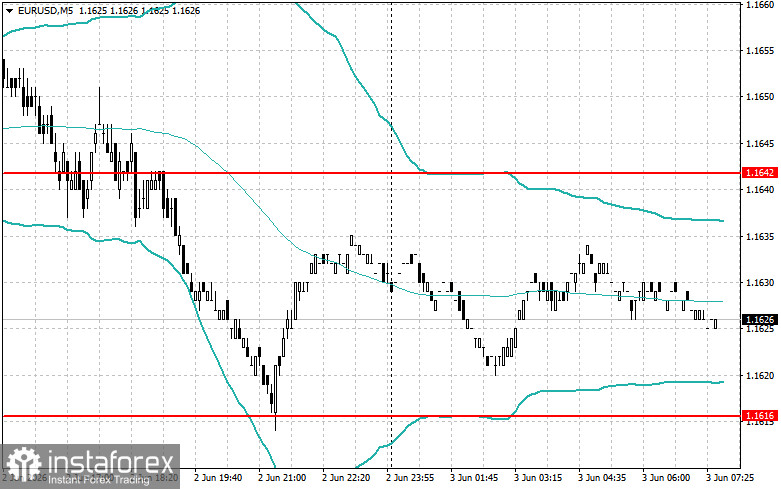
For EUR/USD
- Look for short positions after a failed breakout above 1.1642 when returning below this level.
- Look for long positions after a failed breakout above 1.1616 when returning to this level.
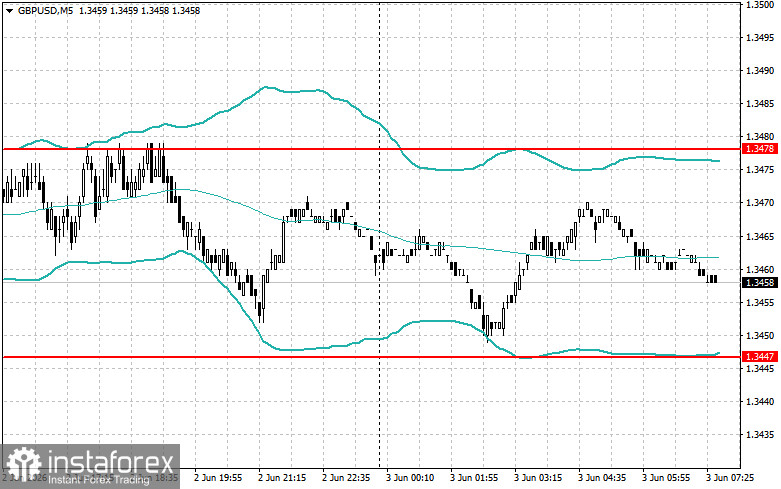
For GBP/USD
- Look for shorts after a failed breakout above 1.3478 when returning below this level.
- Look for longs after a failed breakout above 1.3447 when returning to this level.
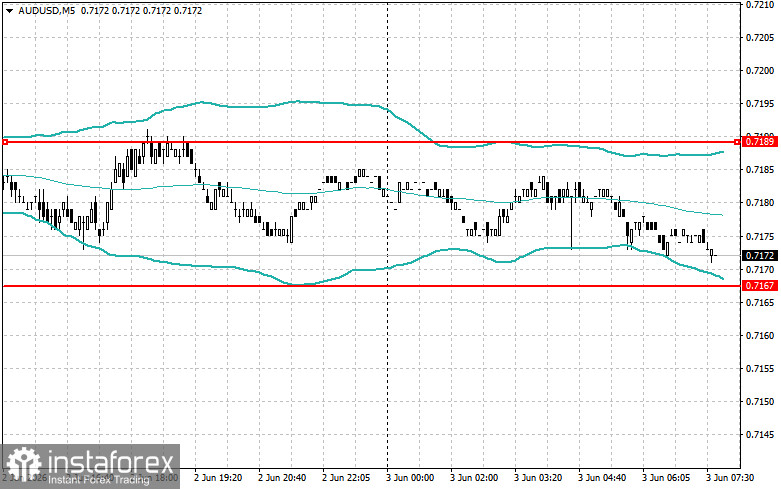
For AUD/USD
- Look for shorts after a failed breakout above 0.7189 when returning below this level.
- Look for longs after a failed breakout above 0.7167 when returning to this level.
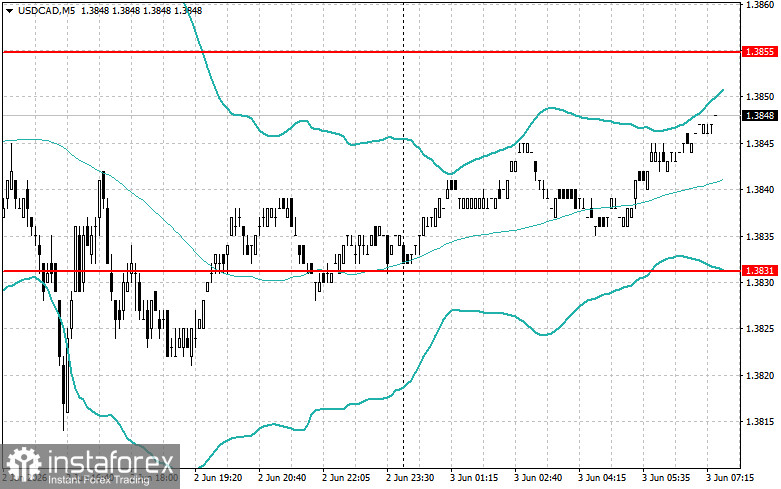
For USD/CAD
- Look for shorts after a failed breakout above 1.3855 when returning below this level.
- Look for longs after a failed breakout above 1.3831 when returning to this level.